Insights
Sales Funnel Design Company in India

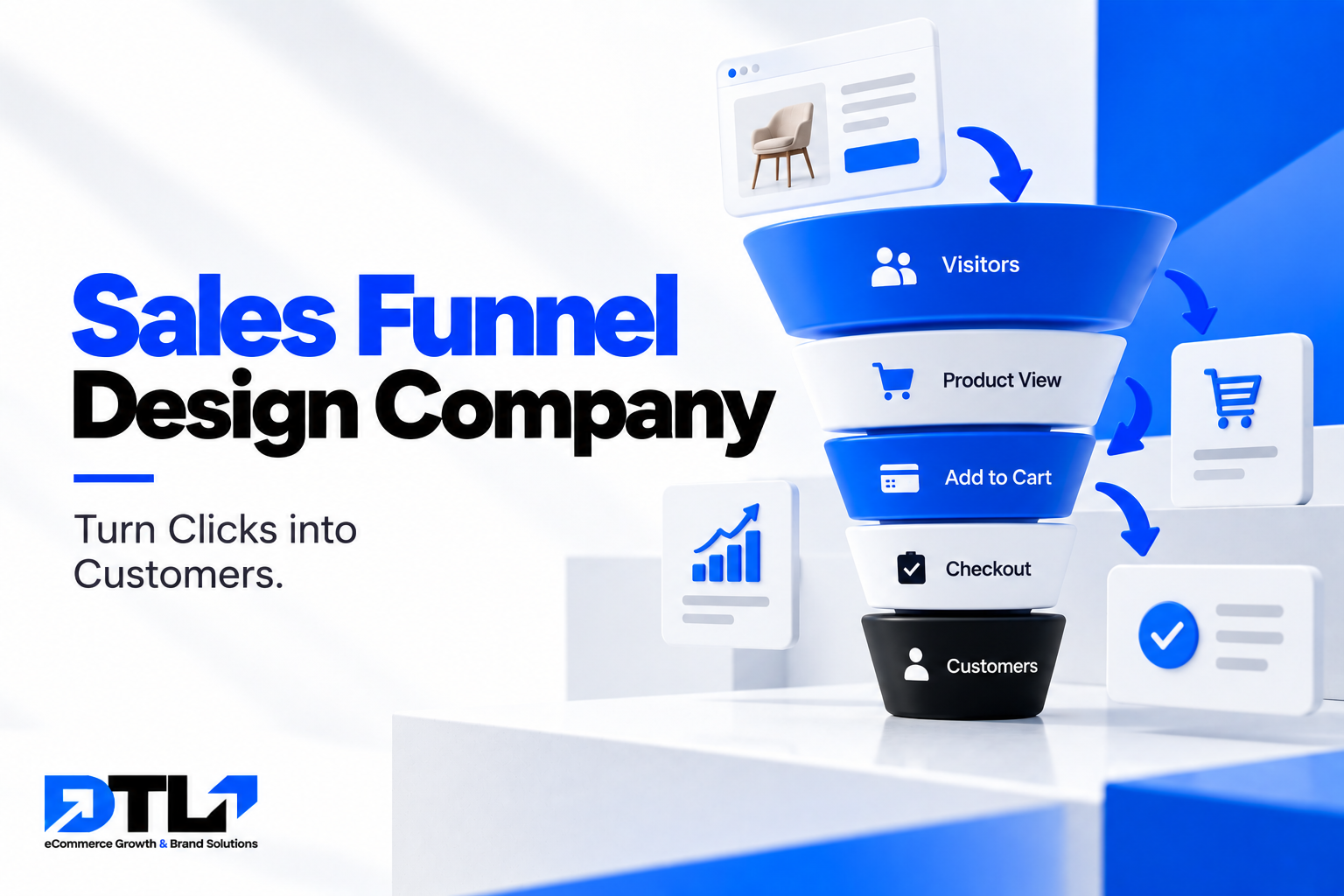
Sales Funnel Design Company in India: Turn Prospects Into Customers
A sales funnel is a structured customer journey that guides potential customers from initial awareness toward a desired business action such as an enquiry, consultation, registration, or purchase.
For businesses looking for a Sales Funnel Design Company in Jodhpur, the objective should not simply be to create a visually attractive landing page. A useful funnel connects the right audience, message, offer, content, landing page, follow-up process, and conversion point.
The basic idea is straightforward:
Attract the right people → build interest → create trust → remove objections → encourage action → retain the customer.
A well-designed funnel can make this journey more structured and measurable.
What Is a Sales Funnel?
A sales funnel is a model used to describe the stages a potential customer can move through before becoming a customer.
The traditional funnel is often represented as:
Awareness → Interest → Consideration → Conversion → Retention
Not every customer follows these stages in exactly the same order. Someone may already know your brand and go directly to a product page. Another person may discover your business for the first time and need several interactions before making a decision. The funnel framework helps businesses understand what information and actions are appropriate at different stages.
Why Sales Funnel Design Matters?
Many businesses focus heavily on getting traffic.
They invest in:
- SEO
- Google Ads
- Social media
- Meta Ads
- Content marketing
- Influencer marketing
- Email campaigns
A sales funnel creates a more intentional path.
For example:
Instagram Ad → Landing Page → Lead Form → Follow-Up → Sales Call → Customer
An eCommerce funnel might look like:
Social Media → Product Page → Cart → Checkout → Purchase → Repeat Purchase
The exact structure depends on the business model.
Understanding the Sales Funnel Stages
Stage 1: Awareness
At this stage, the potential customer becomes aware of a business, product, service, or problem.
Traffic can come from:
- Google Search
- YouTube
- Paid advertising
- Blog content
- Referrals
The objective is not always to sell immediately. The first objective may simply be to get the right audience’s attention.
Stage 2: Interest
The visitor now wants to learn more.
They may explore:
- Website pages
- Product details
- Service information
- Social media
- Videos
- Blog posts
- Reviews
The business should provide useful information that helps the visitor understand the offer.
Stage 3: Consideration
The potential customer starts comparing options.
Questions may include:
Is this right for me?
Can I trust this business?
Is the product worth the price?
How does this compare with alternatives?
What happens after I purchase?
This is where testimonials, case studies, product information, FAQs, guarantees where applicable, and clear service details can become valuable.
Stage 4: Conversion
The visitor is ready to take action.
Depending on the business, this may mean:
- Buying a product
- Filling out a form
- Booking a consultation
- Requesting a quotation
- Calling the business
- Starting a subscription
The conversion step should be clear and easy to complete.
Stage 5: Retention
The funnel does not necessarily end after the first transaction.
Existing customers can become:
- Repeat buyers
- Subscribers
- Referrers
- Brand advocates
Follow-up communication, customer support, useful content, and retention campaigns can help businesses maintain relationships after the initial conversion.
Lead Generation Funnels
A lead generation funnel is designed to turn visitors into potential customers.
A common structure is:
Traffic → Landing Page → Lead Form → Follow-Up → Sales
The lead form may collect information such as:
- Name
- Phone number
- Business information
- Requirement
The amount of information requested should match the business’s needs. A simple enquiry may only require a name and contact number. A complex B2B enquiry may require more information to determine whether the lead is relevant.
Landing Pages in a Sales Funnel
The landing page is often a central part of a funnel. Unlike a general homepage, a landing page can be created around a specific campaign, audience, service, product, or offer.
A landing page can include:
- Strong headline
- Supporting message
- Benefits
- Product or service information
- Visuals
- Testimonials
- FAQs
- Trust signals
- CTA
- Lead form
The page should have a clear objective. If the campaign is designed to generate leads, the page should make submitting an enquiry straightforward. If the campaign is promoting a product, the page should guide the visitor toward purchasing.
The Importance of a Strong Offer
A funnel cannot compensate for an unclear or irrelevant offer. Before designing the funnel, businesses should understand:
What are we offering?
Who is it for?
Why should someone care?
What problem does it solve?
Why should the customer choose this offer?
An offer could be:
- A product
- A service
- A consultation
- A free assessment
- A demo
- A downloadable resource
- A special package
The offer should match the audience and the stage of the customer journey.
Lead Magnets
A lead magnet is something valuable offered in exchange for contact information.
Examples can include:
- Checklist
- Guide
- Template
- Consultation
- Assessment
- Product catalogue
- Educational resource
For example, a digital marketing company could offer a website audit checklist. A business consultant could offer a strategy guide. A B2B company could provide an industry report. The lead magnet should solve a relevant problem for the intended audience.
Calls to Action
Calls to Action, or CTAs, guide visitors toward the next step.
Examples include:
- Get Started
- Book a Consultation
- Request a Quote
- Download the Guide
- Shop Now
- Get a Demo
- Contact Us
- Talk to an Expert
The CTA should match the user’s intent. A person who has just discovered your brand may not be ready for an aggressive sales CTA. They may first need information. A visitor who has already explored the product and reviewed pricing may be much closer to conversion. Good funnel design considers this difference.
Sales Funnels for eCommerce
eCommerce businesses can use sales funnels to structure the online buying journey.
A basic eCommerce funnel may look like:
Social Media / Search → Category → Product Page → Cart → Checkout → Purchase
Each stage can have potential friction. The category page needs to make products easy to discover. The product page needs to communicate value and answer questions. The cart should make the selected items clear. The checkout should be straightforward. The post-purchase experience should provide useful confirmation and communication.
Product Pages and Funnel Conversion
The product page can play a major role in an eCommerce funnel.
A potential customer may need to understand:
- What the product is
- What it does
- Dimensions
- Materials
- Features
- Benefits
- Price
- Availability
- Shipping
- Returns
- Reviews
High-quality product images and clear descriptions can reduce uncertainty. A strong product page should make the next action obvious.
Checkout as the Final Conversion Stage
A customer can reach checkout and still abandon the purchase.
Possible friction points include:
- Complicated forms
- Unexpected charges
- Limited payment options
- Poor mobile experience
- Lack of important information
- Confusing navigation
Funnel optimization should therefore examine the complete customer journey rather than focusing only on the first landing page.
Email Follow-Up
Not every visitor converts immediately.
Email can help businesses continue the conversation with people who have already shown interest.
A simple lead nurturing sequence might include:
Email 1: Welcome and resource
Email 2: Helpful information
Email 3: Common problem and solution
Email 4: Customer proof or case study
Email 5: Offer or consultation
The exact sequence depends on the audience and business. The objective is to provide relevant information rather than simply sending repeated promotional messages.
WhatsApp Follow-Up
For businesses that use WhatsApp for customer communication, it can also become part of a funnel.
For example:
Advertisement → Landing Page → WhatsApp Enquiry → Qualification → Sales Conversation
WhatsApp can make communication convenient, especially for businesses where customers have questions before purchasing.
However, follow-up should be organized.
Businesses need to know:
- Who contacted them
- What they wanted
- When they contacted them
- What stage they are in
- What follow-up is required
Funnel Automation
Automation can help reduce repetitive manual work.
Depending on the business and tools being used, automation can support:
- Lead notifications
- Email sequences
- Appointment reminders
- Customer segmentation
- Follow-up messages
- Lead assignment
- CRM updates
Automation should support the customer journey rather than make communication feel impersonal. The objective is to make the process more consistent and efficient.
Sales Funnel and CRM
A CRM can help businesses manage leads after they enter the funnel.
A typical process may be:
New Lead → Contacted → Qualified → Proposal → Negotiation → Won / Lost
A CRM helps teams understand where potential customers are in the sales process. It can also help prevent leads from being forgotten.
For businesses handling a large number of enquiries, CRM integration can become an important part of funnel management.
Sales Funnel and Conversion Rate Optimization
Sales funnel design and Conversion Rate Optimization are closely connected. CRO focuses on improving the percentage of users who complete desired actions. Sales funnel design focuses on the overall journey from awareness to conversion and beyond.
For example:
Traffic → Landing Page → Form → Follow-Up → Sales
CRO can examine the landing page and form. Funnel design examines how the entire process works. Both approaches can therefore complement each other.
Tracking Funnel Performance
A funnel should be measurable.
Useful metrics can include:
- Visitors
- Landing-page views
- Click-through rate
- Lead submissions
- Qualified leads
- Conversion rate
- Cost per lead
- Customer acquisition cost
- Sales
- Revenue
- Repeat purchases
The appropriate metrics depend on the business model. A B2B company may care more about qualified leads and sales opportunities. An eCommerce company may focus heavily on purchases, revenue, average order value, and customer acquisition cost.
Identifying Funnel Drop-Offs
One of the most useful aspects of funnel analytics is identifying where people stop.
For example:
10,000 visitors
↓
2,000 product-page visits
↓
500 add to cart
↓
200 checkout starts
↓
100 purchases
This simplified example shows several stages where businesses can investigate user behavior.
Why did so many visitors leave before viewing a product?
Why did some visitors view products but not add them to cart?
Why did half of checkout users not complete their purchase?
These questions can reveal optimization opportunities.
Sales Funnels for Service Businesses
Service businesses often need a different funnel structure.
For example:
Google Search → Service Page → Case Study → Consultation Form → Sales Call → Proposal → Customer
A service business may need more trust-building than an impulse purchase.
Useful funnel assets can include:
- Service pages
- Case studies
- Testimonials
- FAQs
- Educational content
- Consultation forms
- Pricing information where appropriate
The funnel should give potential customers enough information to feel comfortable taking the next step.
Local Business Sales Funnels
Local businesses can also use structured funnels.
For example:
Local Search → Business Website → Service Page → Call / WhatsApp → Appointment
The customer may want immediate information. Location, contact information, opening hours, services, reviews, and clear CTAs can therefore become important parts of the journey. For a Jodhpur-based business, the funnel can be designed around the actual geographic market the business serves.
B2B Sales Funnels
B2B sales cycles can be longer than many consumer purchases.
A potential client may:
- Discover a company.
- Read its website.
- Download a resource.
- Subscribe to updates.
- Speak to a sales representative.
- Request a proposal.
- Compare suppliers.
- Make a decision.
This means a B2B funnel may need more nurturing. Educational content, case studies, demonstrations, consultations, and follow-up sequences can support different stages of the journey.
Common Sales Funnel Mistakes
Sending Every Visitor to the Homepage
A campaign promoting a specific service or offer often benefits from a relevant landing page.
No Clear CTA
Visitors should understand what they can do next.
Too Many Steps
Unnecessary steps can create friction.
Asking for Too Much Information
Long forms can discourage users.
Ignoring Follow-Up
Generating a lead is only the beginning of the sales process.
No Lead Qualification
Not every lead has the same value or intent.
No Analytics
Without measurement, it is difficult to identify where the funnel is losing potential customers.
Focusing Only on Acquisition
Businesses should also consider retention and repeat purchases.
Designing the Funnel Before Understanding the Audience
The funnel should be built around real customer needs rather than assumptions.
How to Build a Sales Funnel?
A practical funnel design process can follow these steps.
Step 1: Define the Business Goal
Determine whether the funnel is designed for:
- Sales
- Leads
- Bookings
- Consultations
- Registrations
- Product launches
Step 2: Identify the Audience
Understand who the funnel is targeting.
Step 3: Understand the Customer Problem
Identify what the customer needs and what prevents them from taking action.
Step 4: Create the Offer
Define what the customer receives and why it is valuable.
Step 5: Select the Traffic Source
Choose the appropriate channels:
- SEO
- Google Ads
- Social media
- Meta Ads
- Content
- Referral traffic
Step 6: Build the Landing Experience
Create the relevant page, offer, CTA, and supporting information.
Step 7: Create Follow-Up
Determine what happens if the visitor does not convert immediately.
Step 8: Connect CRM or Automation
Where required, connect the funnel with lead management and follow-up systems.
Step 9: Measure
Track each stage.
Step 10: Optimize
Use data to identify bottlenecks and improve the funnel.
How to Choose a Sales Funnel Design Company in Jodhpur?
Choosing a Sales Funnel Design Company in Jodhpur should involve more than checking whether the agency can create landing pages.
Ask whether the company understands:
- Customer journeys
- Digital marketing
- Landing pages
- Website design
- CRO
- Lead generation
- eCommerce
- CRM
- Analytics
- Follow-up
- Business objectives
The agency should understand what happens before and after the funnel. A landing page cannot be considered successful simply because it looks professional. It should contribute to the intended customer journey.
Why Choose DTLJodhpur for Sales Funnel Design?
DTLJodhpur’s service ecosystem includes Sales Funnel Design alongside web design, eCommerce development, Shopify development, SEO, digital marketing, social media marketing, CRO, AI optimization, and product page design. This combination is relevant because a sales funnel usually depends on several digital assets working together.
For example:
Social Media → Landing Page → Website → Lead Form → CRM → Follow-Up
or:
SEO → Product Page → Cart → Checkout → Purchase
A funnel cannot operate effectively if one important part of the journey is poorly designed. The website needs to communicate clearly. The landing page needs to match the campaign. The CTA needs to be understandable. The form needs to be usable. The follow-up process needs to be organized. The data needs to be measurable.
DTLJodhpur can approach funnel design as part of the broader digital customer journey rather than treating it as an isolated landing-page project.
Build a Sales Funnel Around Your Customer
A sales funnel should not be designed simply because every business is expected to have one. It should solve a real business problem. If your business receives traffic but few enquiries, the funnel may need a better conversion path. If you generate leads but struggle to close them, the follow-up process may need improvement. If customers abandon purchases, the eCommerce funnel may need optimization. If your advertising generates clicks but few conversions, the landing experience may need attention. The funnel should therefore be built around the actual problem.
A useful funnel connects:
Audience → Traffic → Offer → Landing Page → Trust → CTA → Follow-Up → Conversion → Retention
Each stage should have a purpose. The customer should know what is happening and what to do next.
For businesses looking for a Sales Funnel Design Company in Jodhpur, the goal should not simply be to create more marketing steps.
The goal should be to create a clearer customer journey. When website design, SEO, social media, digital advertising, landing pages, CRO, CRM, and follow-up work together, businesses can create a more structured path from discovery to purchase. A well-designed funnel can help businesses understand where prospects are coming from, what they need, where they stop, and what can be improved. That makes the funnel more than a marketing diagram.
It becomes a measurable system for turning relevant attention into meaningful business actions.
Attract the right audience. Give them the right information. Make the next step clear. Follow up intelligently. Measure the journey. Improve continuously.
Turning Traffic Into Customers Starts With the Right Funnel.
Let DTLJodhpur design a customer journey that connects traffic, landing pages, leads, follow-up, conversion, and growth.
Contact us at: 📧 info@dtljodhpur.com